

Table of Content
- Introduction
- What Are Fish Collagen Peptides?
- Why Specifications Matter in Fish Collagen Peptides
- Molecular Weight: The Foundation of Fish Collagen Performance
- Purity: A Key Indicator of Quality
- Solubility: Essential for Modern Formulations
- How to Evaluate a Fish Collagen Peptide Manufacturer?
- Future Trends in Fish Collagen Peptide Development
- Conclusion
- Frequently Asked Questions (FAQ)
- About Titan Biotech Ltd
- References
Introduction
The global demand for fish collagen peptides continues to grow as consumers increasingly seek science-backed solutions for skin health, healthy aging, joint support, and overall wellness. Consequently, fish collagen peptides have become a preferred ingredient for nutraceutical companies developing dietary supplements, functional foods, beverages, gummies, and beauty-from-within formulations.
However, not all fish collagen peptides are created equal. While many products may appear similar on paper, critical specifications such as molecular weight, purity, and solubility can significantly influence product performance, formulation flexibility, consumer experience, and overall quality.
For manufacturers and formulators, understanding these specifications is essential when selecting the right collagen ingredient. Evaluating fish collagen peptides solely based on protein content or price can overlook important quality attributes that impact efficacy and functionality.
This article explores the key specifications of fish collagen peptides and explains why molecular weight, purity, and solubility should be carefully considered during product development.
What Are Fish Collagen Peptides?
Fish collagen peptides are bioactive protein fragments obtained from marine collagen sources, including fish skin, scales, and bones. Through a controlled hydrolysis process, large collagen molecules are broken down into smaller peptides that are easier to dissolve and absorb.
Fish collagen is primarily composed of Type I collagen, the most abundant collagen type found in the human body. Type I collagen is the primary structural protein found in the skin, bones, tendons, ligaments, and other connective tissues.
Due to its excellent amino acid profile and favorable bioavailability, fish collagen peptide has become a popular ingredient in:
- Beauty supplements
- Skin health products
- Joint health formulations
- Sports nutrition products
- Functional foods and beverages
- Healthy aging supplements
When evaluating a fish collagen ingredient, three technical parameters deserve particular attention:
- Molecular Weight
- Purity
- Solubility
Why Specifications Matter in Fish Collagen Peptides?
Specifications provide important information about the quality and functionality of an ingredient. They help manufacturers determine whether a collagen peptide is suitable for a specific application and whether it can consistently meet consumer expectations.
High-quality fish collagen peptides should offer:
- Consistent performance
- Excellent formulation compatibility
- Superior sensory characteristics
- Reliable manufacturing quality
- Strong stability across dosage formats
Understanding ingredient specifications allows formulators to make informed decisions and develop products that deliver both quality and consumer satisfaction.
Molecular Weight: The Foundation of Fish Collagen Performance
Among all fish collagen peptide specifications, molecular weight is often considered one of the most important. Molecular weight refers to the size of peptide molecules after the collagen has undergone hydrolysis. It is typically measured in Daltons (Da) or kilodaltons (kDa). Simply put, molecular weight indicates how large or small the collagen peptide fragments are.
Why Molecular Weight Matters
The hydrolysis process breaks large collagen proteins into smaller peptides. The degree of hydrolysis determines the final molecular weight distribution.
Smaller peptide chains generally provide:
- Improved dispersibility
- Better solubility
- Easier incorporation into formulations
- Enhanced sensory properties
- Greater manufacturing flexibility
Low molecular weight fish collagen peptides are particularly attractive for applications such as:
- Ready-to-drink beverages
- Functional waters
- Beauty powders
- Stick packs
- Instant drink mixes
These applications require ingredients that dissolve quickly and remain stable without affecting texture or mouthfeel.
Typical Molecular Weight Ranges
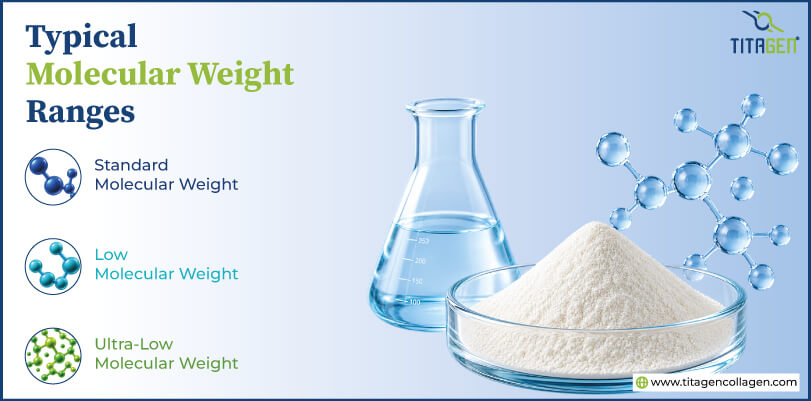
Standard Molecular Weight
Typically ranges from 3,000 to 5,000 Da. These ingredients offer good nutritional value and are commonly used in traditional collagen supplements.
Low Molecular Weight
Typically ranges from 1,000 to 3,000 Da. These peptides demonstrate improved solubility and are widely used in premium nutraceutical formulations.
Ultra-Low Molecular Weight
Typically below 500 Da. These specialized peptides are often utilized in advanced beauty-from-within products and innovative delivery formats. The ideal molecular weight depends on the intended application and formulation goals.
Factors Influencing Molecular Weight Selection
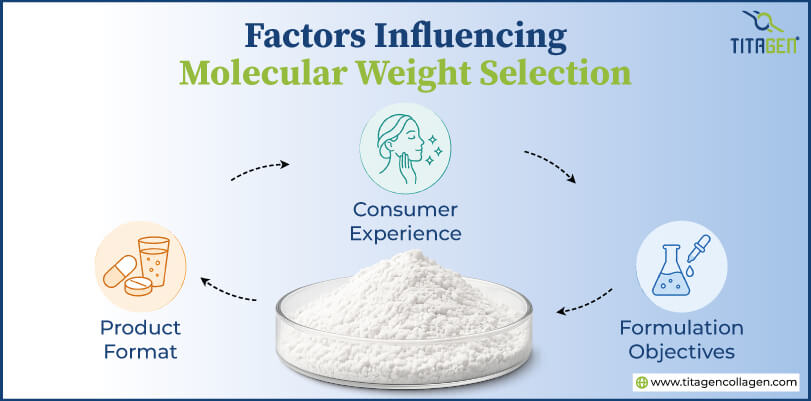
Product Format
Different delivery formats have different functional requirements. For example, powders require good flowability and dissolution, ready-to-drink beverages require excellent clarity and stability, and gummies require compatibility with gelling systems.
Consumer Experience
Consumers increasingly expect collagen products that mix easily and have minimal impact on taste and texture. Low molecular weight peptides often support a better user experience by reducing sedimentation and improving dispersion.
Formulation Objectives
The target application will determine the preferred molecular weight range. Formulators should align ingredient selection with product performance requirements.
Purity: A Key Indicator of Fish Collagen Peptide Quality
Purity is another critical specification that should never be overlooked. Purity refers to the concentration and quality of collagen peptides within the finished ingredient.
A highly purified fish collagen peptide typically contains:
- High protein content
- Low moisture
- Minimal fat
- Low ash levels
- Controlled contaminants
Purity directly impacts ingredient consistency, stability, and product quality.
Why Purity Matters?

Higher purity often translates into a cleaner and more reliable ingredient.
Better Formulation Consistency
Consistent purity helps ensure predictable manufacturing outcomes and batch-to-batch reliability.
Improved Sensory Characteristics
Impurities may contribute to unwanted odor, taste, or appearance. High-purity fish collagen peptides generally provide:
- Cleaner taste profiles
- Reduced fishy notes
- Improved consumer acceptance
Enhanced Product Stability
Ingredients with controlled moisture and impurity levels tend to exhibit better shelf-life stability.
Greater Brand Confidence
Consumers are increasingly scrutinizing ingredient quality and sourcing practices. High-purity collagen ingredients can support premium product positioning and strengthen consumer trust.
Key Purity Parameters to Evaluate
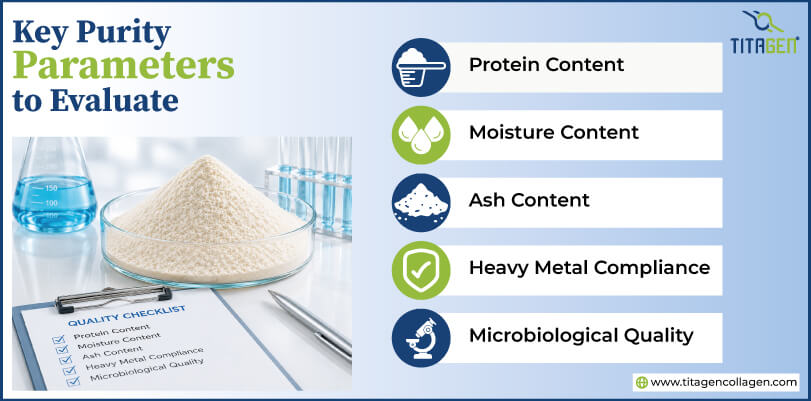
Protein Content
Protein content is one of the most important indicators of collagen concentration. Premium fish collagen peptides often contain protein levels exceeding 90%.
Moisture Content
Excess moisture can impact ingredient stability and storage performance. Lower moisture levels generally support improved shelf life.
Ash Content
Ash represents residual mineral content. Controlled ash levels indicate efficient purification processes.
Heavy Metal Compliance
Marine-derived ingredients should be tested for contaminants such as:
- Lead
- Mercury
- Cadmium
- Arsenic
Reputable suppliers provide analytical data demonstrating compliance with applicable standards.
Microbiological Quality
Manufacturers should verify that ingredients meet established microbiological specifications for safety and quality.
Solubility: Essential for Modern Fish Collagen Formulations
As collagen products expand beyond traditional capsules and tablets, solubility has become an increasingly important specification. Solubility refers to an ingredient’s ability to dissolve in water or other liquid systems. Fish collagen peptides are generally recognized for their excellent solubility compared to many other protein ingredients.
Why Solubility Is Important?
Modern consumers demand convenience. Products that mix quickly and easily are more likely to achieve long-term success.
Poorly soluble ingredients may lead to:
- Clumping
- Sedimentation
- Cloudiness
- Inconsistent texture
- Reduced consumer satisfaction
High-solubility collagen peptides help manufacturers create products with superior sensory appeal.
Benefits of High Solubility

Faster Dissolution
Collagen peptides that dissolve rapidly improve product usability and convenience.
Improved Beverage Applications
High-solubility ingredients perform particularly well in:
- Functional beverages
- Ready-to-drink products
- Protein waters
- Beauty drinks
Greater Formulation Flexibility
Highly soluble collagen peptides can be incorporated into multiple dosage forms without compromising product quality.
Better Consumer Experience
Consumers appreciate products that blend smoothly and require minimal mixing effort.
Factors Affecting Solubility

Molecular Weight
Smaller peptides generally exhibit better solubility.
Hydrolysis Process
The quality and consistency of hydrolysis directly affect ingredient functionality.
Manufacturing Technology
Advanced production processes can improve dissolution characteristics and ingredient stability.
Storage Conditions
Improper storage may affect powder quality and dispersibility over time.
How to Evaluate a Fish Collagen Peptide Manufacturer?
Selecting the right manufacturer is just as important as selecting the right ingredient. When evaluating manufacturers, formulators should consider:
Technical Expertise
Choose manufacturers with strong experience in collagen manufacturing and application support.
Comprehensive Specifications
Look for detailed documentation covering:
- Molecular weight
- Protein content
- Solubility
- Microbiological quality
- Heavy metal compliance
Quality Certifications
Relevant certifications may include:
- GMP
- ISO
- HACCP
- FSSC 22000
- FSSAI
Traceability
Reliable suppliers should provide transparent sourcing information and complete traceability throughout the supply chain.
Consistency
Consistent quality is essential for maintaining product performance and consumer trust.
Future Trends in Fish Collagen Peptide Development
As the collagen market continues to evolve, ingredient innovation is accelerating. Emerging trends include:
- Lower molecular weight collagen peptides
- Enhanced solubility technologies
- Sustainable marine sourcing
- Clean-label formulations
- Beauty-from-within innovations
- Functional beverage applications
Brands that understand and leverage these specifications will be better positioned to develop next-generation collagen products.
Conclusion
Fish collagen peptides have become a cornerstone ingredient in modern nutraceutical, beauty, and wellness formulations. Molecular weight, purity, and solubility are fundamental specifications that influence ingredient functionality, manufacturing performance, and consumer experience.
Lower molecular weight peptides can improve formulation flexibility and dispersibility. High purity supports product quality, consistency, and sensory appeal. Excellent solubility enables seamless incorporation into a wide range of dosage formats, particularly beverages and functional foods.
By understanding these critical specifications, manufacturers can make informed sourcing decisions, optimize product development, and create collagen formulations that meet the evolving expectations of today’s health-conscious consumers.
As demand for premium marine collagen continues to rise, a specification-driven approach will remain essential for developing successful and differentiated collagen products.
Frequently Asked Questions (FAQ)
Q1. What molecular weight is best for fish collagen peptides in nutraceutical supplements?
For most nutraceutical and beauty supplement formulations, low molecular weight fish collagen peptides in the 1,000 to 3,000 Da range offer the best balance of solubility, dispersibility, and formulation flexibility, while ultra-low molecular weight peptides below 500 Da are suited for advanced beauty-from-within and beverage applications.
Q2. Why does purity matter when sourcing fish collagen peptide raw material?
High purity in fish collagen peptide raw material ensures consistent batch-to-batch quality, cleaner taste and odor profiles, reduced fishy notes, better shelf-life stability, and stronger product positioning for premium nutraceutical and cosmetic formulations.
Q3. What protein content should premium fish collagen peptides have?
Premium grade fish collagen peptides should typically contain protein levels exceeding 90% on a dry weight basis, which is a key purity indicator that reputable fish collagen peptide manufacturers like Titan Biotech Ltd. verify through comprehensive certificate of analysis documentation.
Q4. How does solubility affect fish collagen peptide formulations?
High solubility in fish collagen peptides ensures rapid dissolution, clear beverage compatibility, minimal sedimentation, and improved consumer experience across ready-to-drink products, functional waters, beauty powders, and stick pack formats.
Q5. Can fish collagen peptides be used in ready-to-drink beverages?
Yes, low molecular weight fish collagen peptides with high solubility are ideally suited for RTD beverages, functional waters, and beauty drinks due to their clarity, neutral taste profile, rapid dissolution, and stability in liquid formulations.
Q6. Is Titagen® fish collagen peptide clinically approved?
Yes, Titagen® is a clinically studied and approved hydrolyzed fish collagen peptide produced by Titan Biotech Ltd., a trusted fish collagen peptide manufacturer India, providing nutraceutical and cosmetic brands with the scientific validation needed to support premium product claims globally.
Q7. Is Titan Biotech Ltd. a certified fish collagen peptide manufacturer in India?
Titagen® hydrolyzed fish collagen peptides, Titan Biotech Ltd manufacturer premium-quality ingredients backed by detailed technical documentation to nutraceutical companies, cosmetic brands, and contract manufacturers serving both domestic and international markets.
Q8. How can I request specifications or samples of fish collagen peptides from Titan Biotech Ltd.?
Contact Titan Biotech Ltd. through www.titagencollagen.com to request technical data sheets, molecular weight distribution reports, certificates of analysis, and commercial pricing for bulk fish collagen peptides for nutraceutical and cosmetic formulations.
About Titan Biotech Ltd.: Collagen Manufacturer India
Titan Biotech Ltd. is an Indian manufacturer of nutraceutical, pharmaceutical, and animal nutrition ingredients, supplying specification-driven, high-quality functional ingredients to brands across more than 30 countries. As a dedicated collagen manufacturer India-based and internationally recognized, we produce Titagen®, a premium hydrolyzed fish collagen peptide ingredient available in standard, low molecular weight, and customized grades to meet diverse formulation requirements.
Our fish collagen peptides are produced from quality-assured marine raw material through controlled enzymatic hydrolysis and advanced membrane filtration technology, delivering consistent molecular weight distribution, high protein content exceeding 90%, excellent solubility, and a clean sensory profile suitable for nutraceutical supplements, functional beverages, beauty formulations, and cosmetic applications. Titagen® is clinically studied and approved, providing brands with the scientific validation needed to support product claims and build consumer confidence. As a trusted marine collagen manufacturer and fish collagen exporter India nutraceutical brands and global distributors rely on, every batch of Titagen® undergoes comprehensive quality testing for molecular weight profile, protein content, moisture, heavy metals, microbiological safety, and sensory evaluation before release.
Titan Biotech Ltd. operates as a B2B fish collagen raw material supplier and technical partner to formulators, brand owners, and contract manufacturers worldwide.