

Table of Content
- Introduction
- What Makes Fish Collagen Unique?
- The Global Fish Collagen Market: Moving Beyond Beauty
- Fish Collagen and Diabetes Management
- Supporting Cardiovascular Health
- Fish Collagen and Obesity Management
- Powerful Antioxidant Properties
- Role in Inflammation Control
- Benefits for Gut Health
- Tissue Regeneration and Wound Healing
- Potential Neuroprotective Effects
- Healthy Aging: A Comprehensive Approach
- Future Market Opportunities
- conclusion
- Frequently Asked Questions (FAQ)
- About Titan Biotech Ltd
- References
Introduction
For years, fish collagen has been synonymous with youthful skin, stronger nails, healthier hair, and joint support. The global collagen market has largely been driven by beauty-from-within products, anti-aging supplements, and joint health formulations. However, recent scientific research is reshaping the perception of fish collagen.
Today, fish collagen is being investigated for applications that extend far beyond aesthetics. Emerging studies suggest that bioactive peptides derived from fish collagen may play important roles in cardiovascular health, blood glucose management, weight management, inflammation control, wound healing, gut health, tissue regeneration, and healthy aging.
As the nutraceutical industry increasingly shifts toward science-backed ingredients with multiple health benefits, fish collagen is emerging as one of the most promising functional proteins. The growing body of research indicates that specific collagen peptides may influence metabolic pathways associated with diabetes, hypertension, atherosclerosis, obesity, oxidative stress, and chronic inflammation.
This evolution is creating new opportunities for supplement manufacturers, healthcare professionals, and consumers seeking comprehensive wellness solutions.
What Makes Fish Collagen Unique?
Fish collagen, often referred to as marine collagen, is primarily extracted from fish skin, scales, bones, fins, and other marine by-products. Unlike bovine or porcine collagen, fish collagen offers excellent bioavailability due to its lower molecular weight and smaller peptide structure.
Fish collagen is rich in:
- Glycine
- Proline
- Hydroxyproline
- Alanine
- Arginine
These amino acids contribute to tissue repair, antioxidant activity, cellular regeneration, and metabolic regulation. Research indicates that enzymatic hydrolysis of fish collagen produces bioactive peptides that may exert physiological effects beyond simple protein supplementation. These peptides are increasingly being studied as functional nutraceutical compounds.
The Global Fish Collagen Market: Moving Beyond Beauty
The traditional collagen market has been dominated by products targeting:
- Skin elasticity
- Wrinkle reduction
- Hair growth
- Nail strength
- Joint mobility
However, consumer demand is rapidly shifting toward multifunctional ingredients that address broader health concerns.
The increasing prevalence of diabetes, cardiovascular disease, obesity, and age-related disorders has created significant opportunities for ingredients with scientifically supported health benefits.
According to multiple industry analyses, the fastest-growing segments of the collagen market are expected to include:
- Healthy aging
- Sports nutrition
- Metabolic health
- Cardiovascular wellness
- Functional foods
- Medical nutrition
- Personalized nutrition
This shift is encouraging manufacturers to position fish collagen as a comprehensive wellness ingredient rather than solely a beauty supplement.
Fish Collagen Peptides and Diabetes Management
One of the most exciting areas of collagen research involves glucose regulation and diabetes management. Type 2 diabetes continues to rise globally, creating demand for natural ingredients that support healthy blood sugar metabolism.
Researchers have identified specific fish collagen peptides that exhibit DPP-IV inhibitory activity. DPP-IV is an enzyme involved in the breakdown of incretin hormones, which help regulate insulin secretion and glucose metabolism.
Several collagen-derived peptides isolated from fish skin have demonstrated promising antihyperglycemic properties in experimental studies. Fish collagen peptides from tilapia and Pacific halibut have shown the ability to modulate glucose metabolism and improve glycemic control pathways. These findings suggest potential applications in future diabetes-support formulations.
While fish collagen should not be considered a treatment for diabetes, its emerging role as a metabolic support ingredient is attracting considerable scientific interest.
Supporting Cardiovascular Health with Fish Collagen Peptides
Cardiovascular disease remains the leading cause of mortality worldwide. Researchers are increasingly investigating how fish collagen peptides may contribute to cardiovascular wellness through multiple mechanisms.
Blood Pressure Regulation
Several collagen peptides derived from marine sources have demonstrated angiotensin-converting enzyme (ACE) inhibitory activity.
ACE is an important enzyme involved in regulating blood pressure. Excessive ACE activity can contribute to hypertension by promoting vasoconstriction.
Studies have identified bioactive fish collagen peptides capable of inhibiting ACE activity, suggesting potential applications in cardiovascular support supplements. Peptides isolated from species such as Nile tilapia, halfbeak fish, scorpion fish, and pearl oyster have shown promising antihypertensive effects in laboratory studies.
Anti-Atherosclerotic Potential
Research involving salmon-derived collagen peptides has demonstrated beneficial effects on inflammatory biomarkers, endothelial health, platelet activation, and oxidative stress pathways associated with atherosclerosis.
Investigators reported improvements in biomarkers linked to vascular injury and chronic inflammation, suggesting that fish collagen peptides may support healthy blood vessel function and cardiovascular resilience.
Antiplatelet Activity
Certain collagen peptides isolated from fish skin have shown antiplatelet activity while simultaneously providing antioxidant protection.
These findings suggest that marine collagen-derived peptides may contribute to cardiovascular health by supporting healthy circulation and vascular function.
Fish Collagen and Obesity Management
Obesity is closely linked to diabetes, cardiovascular disease, metabolic syndrome, and chronic inflammation. Emerging evidence suggests that fish collagen peptides may influence body weight regulation through several mechanisms.
Studies involving fish collagen hydrolysates have demonstrated effects on:
- Fat metabolism
- Appetite regulation
- Gut microbiota modulation
- Glucose metabolism
- Inflammatory responses
Researchers studying collagen peptides derived from walleye Pollock observed reductions in obesity-related markers alongside improvements in gut microbial composition. Additional research involving marine collagen hydrolysates has reported favourable effects on fasting blood glucose and weight management parameters.
These findings position fish collagen as a potentially valuable ingredient within weight-management and metabolic-health formulations.
Powerful Antioxidant Properties of Marine Collagen Peptides
One of the most extensively studied functions of marine collagen peptides is their antioxidant activity.
Oxidative stress is a major contributor to:
- Aging
- Cardiovascular disease
- Diabetes
- Neurodegeneration
Marine collagen peptides possess amino acid sequences capable of neutralizing free radicals and reducing oxidative damage.
Numerous studies have demonstrated antioxidant activity using validated laboratory methods such as:
- DPPH scavenging assays
- ABTS scavenging assays
- Hydroxyl radical scavenging tests
- Superoxide anion scavenging assays
Researchers have shown that fish collagen peptides can act as natural antioxidants by donating electrons, scavenging free radicals, and reducing oxidative stress within biological systems.
These antioxidant effects may explain many of the broader health benefits associated with fish collagen supplementation.
Role of Fish Collagen in Inflammation Control
Chronic low-grade inflammation is increasingly recognized as a root contributor to numerous health conditions.
Inflammatory processes are involved in:
- Arthritis
- Obesity
- Diabetes
- Cardiovascular disease
- Neurodegenerative disorders
Research has demonstrated that fish collagen peptides may help modulate inflammatory pathways.
Several studies reported reductions in inflammatory mediators such as TNF-alpha and IL-6 following administration of fish collagen hydrolysates. These anti-inflammatory effects may contribute to improved tissue recovery, metabolic health, and cardiovascular function.
Benefits of Fish Collagen for Gut Health
The gut is increasingly considered a central regulator of overall health. Collagen-derived amino acids such as glycine and proline may support intestinal barrier integrity and digestive health.
Recent research also suggests that fish collagen peptides may influence gut microbiota composition, potentially promoting a healthier microbial environment that supports metabolic function and immune balance.
This opens opportunities for combining fish collagen with probiotics, prebiotics, and digestive health ingredients.
Tissue Regeneration and Wound Healing
Fish collagen has long been used in biomedical applications because of its excellent biocompatibility.
Beyond skin health, research demonstrates its role in:
- Tissue repair
- Support for wound repair
- Assistance with oral tissue restoration
- Support for connective tissue repair
- Recovery support following surgical procedures
Studies involving tilapia collagen peptides have shown accelerated healing of oral ulcers and improved periodontal tissue regeneration. Additional research demonstrates enhanced fibroblast activity and improved tissue remodelling following collagen peptide supplementation.
These findings highlight the potential of fish collagen in medical nutrition and recovery-focused formulations.
Potential Neuroprotective Effects of Fish Collagen Peptides
Another emerging area of interest is brain health. Researchers have identified marine collagen peptides exhibiting neuroprotective activity against oxidative stress-induced neuronal damage.
Although human evidence remains limited, preliminary studies suggest that specific collagen-derived peptides may help support neuronal survival and cognitive health through antioxidant and anti-inflammatory mechanisms.
Given the growing prevalence of neurodegenerative disorders, this area warrants further investigation.
Healthy Aging: A Comprehensive Approach with Fish Collagen
Traditionally, collagen’s anti-aging benefits focused on wrinkle reduction and skin elasticity.
Today, healthy aging encompasses much broader objectives:
- Maintaining cardiovascular health
- Helping maintain healthy cognitive performance
- Supporting comfortable movement and mobility
- Managing inflammation
- Protecting metabolic health
- Enhancing recovery
Fish collagen is uniquely positioned to address multiple aspects of healthy aging simultaneously through its antioxidant, anti-inflammatory, tissue-regenerative, and metabolic-support properties. This holistic approach aligns with modern consumer preferences for multifunctional wellness ingredients.
Future Market Opportunities for Fish Collagen Peptides
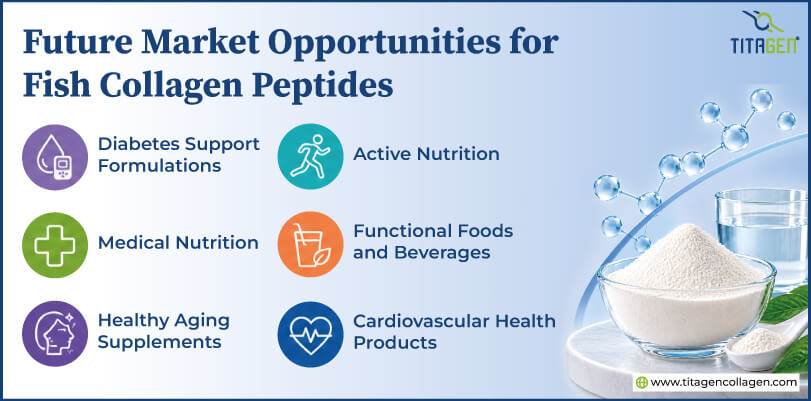
The future of fish collagen extends well beyond cosmetic applications.
Key high-growth opportunities include:
Diabetes Support Formulations
Collagen peptides targeting glucose metabolism and insulin regulation.
Cardiovascular Health Products
Formulations focused on blood pressure, circulation, and vascular protection.
Active Nutrition
Recovery, muscle maintenance, and tissue repair products for athletes.
Healthy Aging Supplements
Comprehensive formulations combining collagen with antioxidants and longevity-support ingredients.
Medical Nutrition
Applications supporting recovery, wound healing, and chronic disease management.
Functional Foods and Beverages
Protein-enriched foods delivering both nutritional and physiological benefits.
As research continues to validate these applications, fish collagen is expected to become a cornerstone ingredient across multiple nutraceutical categories.
Conclusion
Fish collagen is undergoing a remarkable transformation. Once regarded primarily as a beauty ingredient, it is now emerging as a multifunctional nutraceutical with applications spanning metabolic health, cardiovascular wellness, healthy aging, inflammation management, tissue regeneration, and antioxidant protection.
Scientific studies increasingly demonstrate that fish collagen-derived peptides can influence biological pathways associated with diabetes, obesity, hypertension, atherosclerosis, and chronic inflammation. Their exceptional bioavailability, safety profile, and sustainability further strengthen their appeal in modern health and nutrition markets.
As consumer demand shifts toward science-backed ingredients with broad-spectrum benefits, fish collagen is poised to become one of the most versatile and valuable ingredients in the future of nutraceutical innovation.
Frequently Asked Questions (FAQ)
Q1. How do fish collagen peptides support cardiovascular health?
Fish collagen peptides have demonstrated ACE inhibitory activity for blood pressure regulation, anti-atherosclerotic effects through inflammatory biomarker reduction, and antiplatelet activity, all of which may contribute to cardiovascular wellness support.
Q2. Is fish collagen beneficial for diabetes and blood sugar management?
Research has identified specific fish collagen peptides with DPP-IV inhibitory activity that may help regulate insulin secretion and glucose metabolism, and clinical studies on marine collagen peptides in type 2 diabetic patients have shown improvements in fasting blood glucose, HbA1c, and lipid profiles.
Q3. Can fish collagen help with weight management and obesity?
Emerging preclinical evidence suggests fish collagen hydrolysates may influence fat metabolism, appetite regulation, gut microbiota modulation, and inflammatory responses, positioning fish collagen as a potentially valuable ingredient in weight-management and metabolic-health formulations.
Q4. What antioxidant benefits do fish collagen peptides offer?
Marine collagen peptides have demonstrated free radical scavenging activity through DPPH, ABTS, hydroxyl radical, and superoxide anion assays, acting as natural antioxidants that may help reduce oxidative stress associated with aging, cardiovascular disease, and metabolic disorders.
Q5. Is Titagen® fish collagen suitable for multifunctional nutraceutical formulations?
Yes, Titagen® by Titan Biotech Ltd. is a clinically studied, hydrolyzed fish collagen peptide ingredient manufactured for use across skin health, joint support and healthy aging formulations, making it ideal for multifunctional nutraceutical product development.
Q7. Is Titan Biotech Ltd. a certified fish collagen manufacturer in India for global supply?
Yes, Titan Biotech Ltd. is a certified fish collagen peptide manufacturer India-based, producing Titagen® and supplying marine collagen raw material to nutraceutical brands, cosmetic manufacturers, and contract producers across India and more than 100 countries globally.
Q8. How can I source bulk fish collagen peptides?;
Contact Titan Biotech Ltd. through www.titagencollagen.com to request Titagen® samples, technical data sheets, molecular weight specifications, clinical documentation, and commercial pricing for B2B fish collagen peptide supply.
About Titan Biotech Ltd.: Manufacturer of Fish Collagen Peptides
Titan Biotech Ltd. is manufacturer of nutraceutical, pharmaceutical, and animal nutrition ingredients, supplying high-quality functional ingredients to brands across more than 100 countries. As the manufacturer of Titagen®, a premium clinically studied hydrolyzed fish collagen peptide ingredient, we serve nutraceutical brands, cosmetic formulators, functional food manufacturers, and contract producers seeking a science-backed marine collagen raw material with broad-spectrum health applications.
Titagen® is produced through controlled enzymatic hydrolysis and advanced membrane filtration technology, delivering consistent molecular weight distribution, high protein content, excellent solubility, and a clean sensory profile. As a trusted fish collagen manufacturer India-based and a recognized fish collagen exporter India nutraceutical companies globally rely on, every batch of Titagen® undergoes comprehensive quality testing for molecular weight profile, protein content, microbiological safety, heavy metals, and sensory evaluation before release.
Whether your brand is developing a skin beauty supplement, a healthy aging supplement, or a functional food enriched with marine collagen, Titan Biotech Ltd. provides the ingredient quality, clinical backing, and B2B supply reliability that the world’s most demanding nutraceutical and cosmetic brands require.
References:
- Marine Antioxidants from Marine Collagen and Collagen Peptides with Nutraceutical Applications (2024)
PMC11351696 Review Article - Fish collagen peptides and antioxidant nutraceutical applications, cardiovascular and metabolic health sections
Marine Collagen Antioxidants Review - Fish collagen clinical and bioactive peptide review
Marine Collagen Review Article